Vinyl & Insulated
Durable, low-maintenance vinyl. Insulated panels add a layer against the cold.

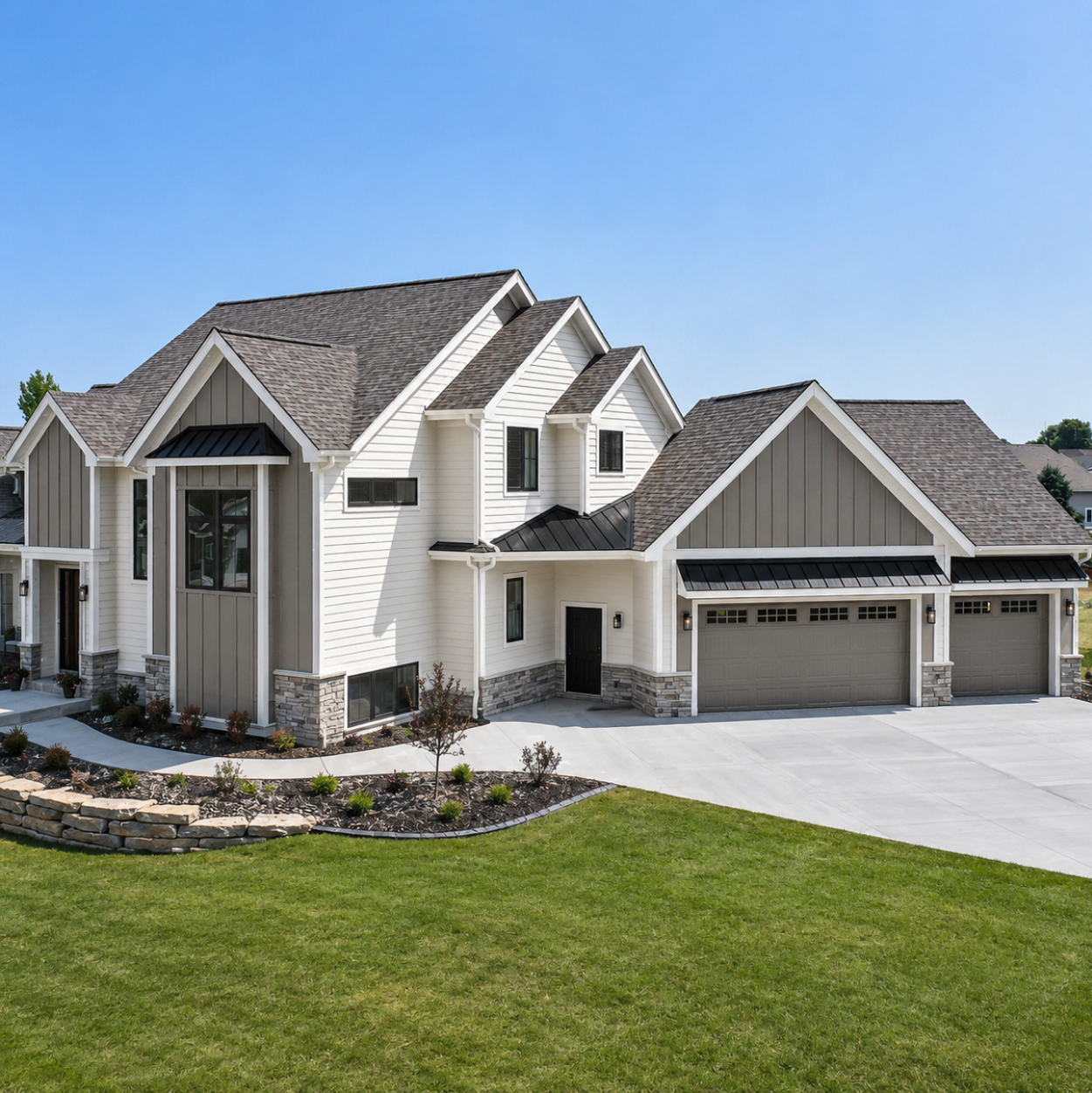
Storm-damaged or worn siding, replaced so your home stays sealed against Wyoming wind, snow, and hail.
Siding is your home's first defense against Wyoming weather. Wind drives rain behind cracked panels. Hail splits vinyl. Once water gets behind the siding, it finds the framing. The National Weather Service classes hail one inch or larger as severe, and that size splits aging vinyl.
Gregco Roofing & Construction replaces storm-damaged and worn siding across the Evanston corridor. We look at your home, photograph the damage, and show you what we find. We document. You decide.
We match your existing profile and color where we can, and seal every penetration so the wall stays dry.
Vinyl & Insulated, Storm & Hail Replacement, Trim, Soffit & Fascia, and Color & Profile Match — each explained below.
Durable, low-maintenance vinyl. Insulated panels add a layer against the cold.
Hail-cracked or wind-torn siding, documented and replaced to match.
The edges water attacks first. We replace rotted trim, soffit, and fascia so the whole envelope seals.
We match your existing siding profile and color where we can, so the repair blends in.
Four steps, always in the same order: on-site visit, we show you the photos, we do the work, photo record.
Wyoming property owners ask 12 questions most often about siding — answered here in plain language.
Often, within limits the manufacturer sets rather than we do. Profiles and colours get discontinued, and a wall that has faced south or west has already chalked and faded, so a new panel beside it can read a shade off even when the line is still made. We hold the closest options against the existing wall and show you the difference in daylight before anything is ordered.
Yes, wall by wall rather than as a single before-and-after. Hail and wind damage concentrates on the elevations that faced the storm, so the record names which wall, where on it, and what the damage is: cracks, chips, punched holes, or panels worked loose at the lock. You get the same photographs we do, and the written scope follows what they show.
Hail damage to vinyl siding shows as cracks, chips, and punched holes, not only dents. Check the walls that faced the storm, and look along the bottom lock of each panel. The National Weather Service classes hail one inch or larger as severe, and that size splits aging vinyl.
Fading is ultraviolet light breaking down the pigment at the panel surface. It happens faster at altitude. Evanston sits at 6,749 feet, per the US Census Bureau, and ultraviolet strength rises about 10 percent for every 1,000 meters of elevation, per the World Health Organization. Walls facing south and west fade first.
Vinyl siding carries a tested wind rating, not a marketing one. Certified products meet ASTM D3679 under the Vinyl Siding Institute certification program, and higher-rated panels are made for exposed walls. Evanston sits in the I-80 wind corridor, where winter gusts of 30 to 60 mph are common, per the Wyoming Department of Transportation.
A crack lets wind-driven water past the panel and onto the sheathing behind it. In Wyoming that water freezes, and water expands by roughly nine percent when it freezes, per the US Geological Survey. Each freeze widens the crack and works the fastener loose, so a small split in October is a larger repair by spring.
Vinyl expands and contracts with temperature, so panels hang on their fasteners instead of being pinned tight. A 12-foot panel can move as much as half an inch, per the Vinyl Siding Institute installation manual. Nail heads stay slightly off the panel and gaps are left at trim. Siding that buckles was nailed too tight.
Cold makes vinyl more brittle, and installation allows for it. The Vinyl Siding Institute installation manual calls for a three-eighths inch gap at trim and accessories when installing below 40 degrees Fahrenheit, instead of the usual quarter inch. Siding work continues through a Wyoming winter with that allowance.
A water-resistive barrier sits between the siding and the wall sheathing. It is not optional: Section R703 of the International Residential Code requires a water-resistive barrier behind exterior wall covering, with flashing at every opening. Siding sheds most water. The barrier and flashing handle what wind-driven rain pushes past it.
Insulated vinyl siding is a panel with rigid foam laminated to its back. The foam fills the gap behind the panel, so it sits flatter and resists dents better than hollow vinyl. The Vinyl Siding Institute certifies insulated siding as its own product category, with a published R-value per panel.
Yes. Gregco's documented commercial siding project is siding replacement at a Wyoming DOT maintenance facility, Wamsutter — completed January 2015. Commercial and municipal work is scoped the same way as residential: an on-site look at the walls, photographs of the visible conditions, and a written scope in priority order.
Yes. Siding replaces one elevation at a time, so only a single wall is open on any given day. Gregco secures each wall before the crew leaves, keeps entrances and walkways clear, and cleans the site daily. On occupied buildings the wall sequence is agreed before work starts.
WYOMING SERVICE AREA
Siding is available across Evanston, Kemmerer, Cokeville, Rock Springs, Green River, Mountain View, Lyman — every listed city links to its own page.
Loading interactive map…
Red pins identify communities where Gregco currently accepts service inquiries. The map is for orientation, not a surveyed service boundary.
Request a siding estimate
Share the address, what you noticed, and when the issue began. Gregco will confirm the service area and contact you about the next step.