Roofing in Cokeville
New roofs and repairs in asphalt shingle or standing-seam metal.

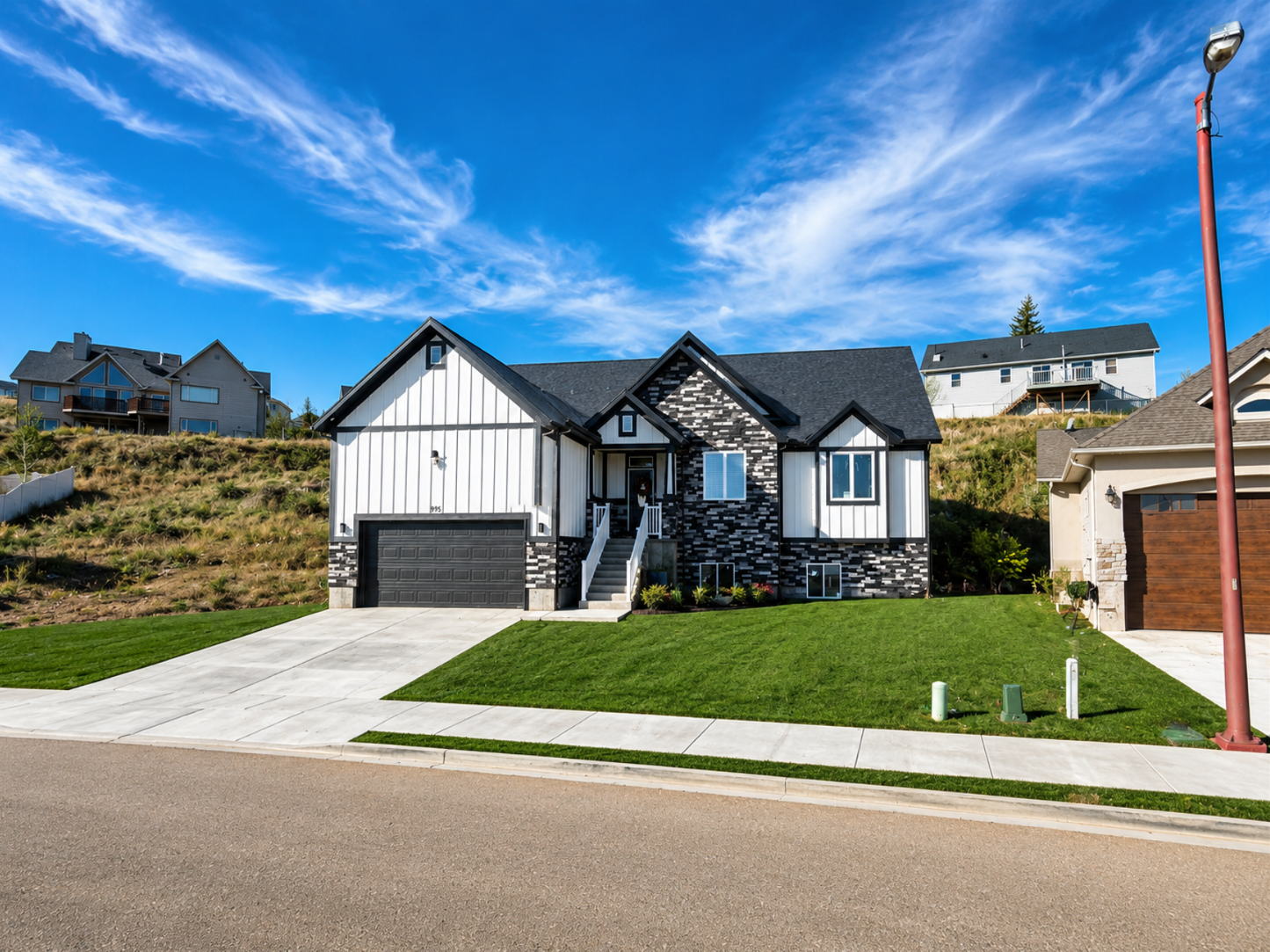
Gregco Roofing & Construction roofs homes across Cokeville and the Lincoln County corridor. Storm damage, leaks, and old roofs. We take a look and show you the photos.
You see the photos, then you decide what’s next.
New roofs and repairs in asphalt shingle or standing-seam metal.
Documented, no-pressure work. You see the photos, then you decide.
We repair storm and hail damage to your roof, siding, and gutters.
Documented, no-pressure work. You see the photos, then you decide.
We replace storm-damaged siding so your home stays sealed and dry.
Seamless gutters that move snowmelt off the roof and away from the house.
Cokeville gets more snow, on more days, than anywhere else Gregco works: about 64 inches a year spread across roughly 105 snowfall days. Sitting on the floor of the Bear River valley at 6,194 feet, it also holds cold better than it should, with January lows near 1°F. Snow that never fully melts off, on a roof that never fully warms up, is the exact recipe for ice dams at the eaves.
6,194 ft
Valley floor traps cold air, so roofs stay frozen longer.
Source: US Census Bureau
about 64 in / year
The heaviest snow load of any town Gregco serves.
Source: Weather Atlas climate normals
about 105 per year
Snow sits on the roof for months, not days.
Source: Weather Atlas climate normals
about 1°F in January
Deep cold turns asphalt shingles brittle and easy to crack.
Source: US Climate Data (1991-2020 normals)
subarctic (Dfc)
Colder classification than the high-desert towns east of here.
Source: Weather Atlas
502 (2020 census)
Small town, mostly ranch buildings and older housing stock.
Source: US Census Bureau
Cokeville sits at 6,194 feet on the floor of the Bear River valley, a ranching town of about 500 people in Lincoln County where US 30 crosses the river on its way toward the Idaho line. By the numbers it is the hardest place on a roof in the whole corridor.
Snow is most of the story. Cokeville averages roughly 64 inches a year across about 105 days with measurable snowfall. Compare that with Kemmerer, east of here and nearly 600 feet higher, which averages about 47 inches across 89 days. The difference is the valley. Storms unload as they come down it, and the cold air that follows settles on the valley floor and stays put.
That settled cold is the second problem. The January average low runs near 1 degree on the 1991 to 2020 normals, and the climate here classifies as subarctic rather than the semi-arid high desert you find over at Rock Springs or Green River. Asphalt shingles get brittle at those temperatures. A shingle that would flex in Evanston can crack here, and the damage rarely announces itself. It shows up months later as a stain on a ceiling.
Put heavy snow and deep cold together and you get ice dams. Snowpack sits on the roof for weeks because it never gets warm enough to shed. Heat escaping through the ceiling melts the underside of that pack, the meltwater runs down to the cold overhang, and it refreezes into a ridge of ice at the eave. Everything behind the ridge backs up under the shingles and into the ceiling below. Most homeowners here never see it happening. They see the stain in March.
So ventilation and eave detail matter more in Cokeville than in almost anywhere else we work, and so does the condition of the flashing, because a hundred-plus freeze and thaw cycles a year will find any gap in it.
The properties are spread out. There are ranch buildings up the Smiths Fork and Thomas Fork drainages, houses in town along US 30, and outbuildings south toward Cokeville Meadows, where the refuge follows about twenty miles of the Bear River. On outbuildings and steeper residential roofs, standing-seam metal is worth pricing against shingle, because it sheds snow instead of holding it.
We come out, look at the roof, photograph what we find, and show you the pictures before anyone talks about scope or price.
Where we work in Cokeville: Downtown Cokeville (US 30), Smiths Fork, Thomas Fork, Cokeville Meadows.
Four steps, always in the same order: on-site visit, we show you the photos, written scope, photo record.
Straight answers about roofs, storms, and insurance claims. Still unsure? Just call.
The valley is why. Cokeville averages about 64 inches of snow across roughly 105 snowfall days, per Weather Atlas climate normals, while Kemmerer just east of it averages about 47 inches across 89 days. Storms unload as they come down the Bear River valley. For a roof, that means a load carried for months and very little chance to dry out in between.
Yes. Weather Atlas classifies Cokeville as subarctic rather than high desert, and January lows average near 1 degree on the 1991 to 2020 normals from US Climate Data. Cold air settles on the valley floor at 6,194 feet and stays put. A roof up here never fully warms, so the snow does not shed and brittle shingles crack instead of flexing.
Cokeville is one of the Wyoming towns we serve, and the smallest of them, with 502 residents at the 2020 census, per the US Census Bureau. Properties sit far apart here. We drive to houses in town, to ranch buildings up the Smiths Fork and Thomas Fork, and south toward Cokeville Meadows.
Asphalt shingles need warmth to seal down, and Cokeville rarely gives them any. January lows average near 1 degree on the 1991 to 2020 normals from US Climate Data, and measurable snow falls on about 105 days a year, per Weather Atlas. We can look at a roof any month. Shingle replacement waits for warmer weather.
An ice dam is a ridge of ice at the eave that backs meltwater under the shingles. Elsewhere a warm spell releases it. Cokeville gets measurable snow on about 105 days a year, per Weather Atlas normals, and January lows near 1 degree on US Climate Data normals, so the ridge is fed faster than it melts.
Flashing and the eave line. Flashing is the metal that seals a roof where it meets a wall, a chimney or a valley. Sitting on the valley floor at 6,194 feet, per the US Census Bureau, a Cokeville roof freezes and thaws across roughly 105 snowfall days, and that cycling finds every gap.
They fill, and they still belong on the house. Cokeville averages about 64 inches of snow across roughly 105 snowfall days, per Weather Atlas normals, so a gutter here carries ice weight for months and needs closer hanger spacing. A gutter does not cause an ice dam, and taking one down will not stop it.
Often it is. Standing-seam metal sheds snow instead of holding it, which matters where about 64 inches falls across roughly 105 snowfall days, per Weather Atlas normals. Plan where that load lands. On an outbuilding, a slide across a doorway or a parked truck costs more than the snow it shed.
A low-slope roof cannot shed, so it holds the season's snow. Cokeville averages about 64 inches a year, per Weather Atlas normals, and January lows near 1 degree, per US Climate Data, keep it frozen in place. On a TPO or EPDM membrane we look hardest at the seams and the low points.
It does. The town counted 502 residents at the 2020 census, per the US Census Bureau, and much of what stands is older houses and ranch buildings. Roofs of that age often predate Ice & Water Shield at the eaves. Where snow sits for months, that membrane is what stands between backed-up water and the ceiling.
It can. Weather Atlas classifies Cokeville as subarctic, and January lows average near 1 degree on the 1991 to 2020 normals from US Climate Data. Vinyl and painted panels stiffen at that temperature, so an impact cracks them rather than denting them. Fasteners work loose as the wall expands and contracts.
Look at the eave line, the flashing at the chimney and the valleys, and how firmly the gutters are fastened. Once the pack builds, the roof will not be clear again for months. Cokeville sees measurable snow on roughly 105 days a year, per Weather Atlas normals, so late summer is the practical window.
WYOMING SERVICE AREA
11 communities across Wyoming and the corridor around it — the ones with a built page link straight to it.
Closest by: Kemmerer, Diamondville, Border, Sage.
Loading interactive map…
Red pins identify communities where Gregco currently accepts service inquiries. The map is for orientation, not a surveyed service boundary.
Request a roof inspection
Share the address, what you noticed, and when the issue began. Gregco will confirm the service area and contact you about the next step.