Standing-Seam Panels
Concealed fasteners and a raised, interlocking seam define the panel most homeowners picture when they say metal roof. No exposed screw heads for ultraviolet light and freeze-thaw to work loose over time.

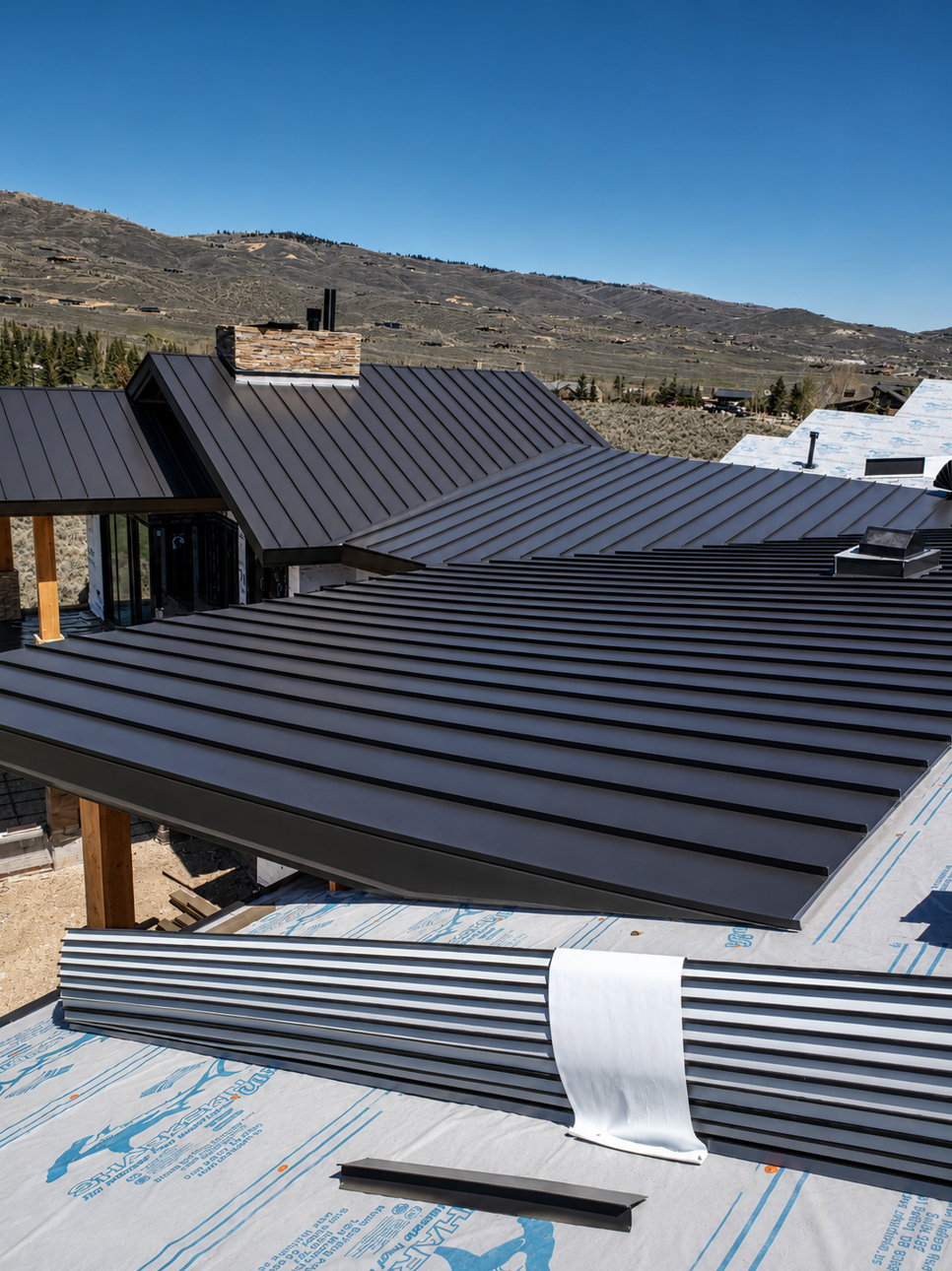
Standing-seam and exposed-fastener systems, snow retention where it matters, and a written scope before any panel goes down.
Standing-seam metal roofing is a raised-seam panel system installed as a full roof, not layered over shingles. It earns its added cost mainly where snow is heaviest: Evanston averages 63 inches of snow a year, per US Climate Data, and a smooth metal panel sheds most of that load before it can pile up and refreeze.
Gregco Roofing & Construction has installed metal roofing across the Evanston corridor since 2011. We inspect the existing roof, photograph what we find, and put panel type, gauge and layout in writing before anyone discusses price. We document. You decide.
Panel layout is what separates a metal roof that performs from one that does not: snow-shed direction, trim runs at every ridge and valley, and where snow guards go all get planned before a single panel goes down. Our principal completed the TopMetal hands-on metal roofing installation masterclass with Sherwin-Williams Coil Coatings, February 2026, and we still document the roof and photograph the plan before anyone signs off on it.
Standing-Seam Panels, Snow Retention, Exposed-Fastener Systems, and Trim & Flashing Detail — each explained below.
Concealed fasteners and a raised, interlocking seam define the panel most homeowners picture when they say metal roof. No exposed screw heads for ultraviolet light and freeze-thaw to work loose over time.
A smooth panel releases snow in a sheet, not a slow melt. Guards placed above doorways, walkways and parked vehicles hold that load in place until it lets go on its own schedule instead of without warning.
A screw-down panel priced below standing-seam, with fasteners driven straight through the face on a set pattern. A practical fit for shops, barns and outbuildings, where the gaskets get checked and re-torqued over the life of the roof.
Ridge caps, valleys, and the flashing at walls and chimneys decide whether a metal roof actually sheds water — the open field of panel rarely fails first. We detail every transition, not just the flat runs between them.
Four steps, always in the same order: on-site inspection, photo documentation, written metal roofing scope, we do the work.
Wyoming property owners ask 10 questions most often about metal roofing — answered here in plain language.
Often, but not always. Metal earns its higher upfront cost fastest on roofs that carry heavy snow load, high wind, or long sun exposure — conditions southwest Wyoming has most winters. On a smaller, simpler roof, one headed toward a sale soon, or a tight budget where a sound asphalt system already does the job, the added cost may not be worth it. We show you the roof's actual condition and the trade-off, and you decide which one fits your situation.
Longer than asphalt as a general rule, since a panel does not lose granules or crack from ultraviolet light the way a shingle does. We do not have a documented lifespan figure for metal on file to quote you, and we will not invent one. What actually decides how long a specific system holds up is panel gauge, coating quality, and how well the flashing and fasteners were detailed at install. Ask about gauge and coating on the system you are pricing rather than a round industry number.
Less than people expect once it is installed the right way. Panels go down over solid decking with underlayment beneath them — the same base an asphalt roof sits on — so the hollow drum sound people picture from an open-frame metal building does not carry into a house the same way. Deck thickness and roof ventilation do more to quiet a metal roof than the panel material itself.
Yes, and that is exactly why snow retention exists. A smooth panel with no exposed fasteners lets a winter's accumulation release at once instead of melting off gradually, which is a real hazard over an entry, a walkway or a parked vehicle. Snow guards placed above those spots hold the load in place until it melts on its own schedule instead of coming down in one sheet.
Sometimes, using a batten or furring-strip system that creates an air gap between the old shingles and the new panel — manufacturers allow it under specific conditions. We still prefer tear-off to bare decking on most jobs, because a layover leaves the deck and any hidden damage covered, and showing you what is actually underneath is the standard every scope here is built from. The roof and the site visit decide which approach applies to yours.
No — that is a myth. A roof's material does not set the indoor temperature; what sits under the deck and how well the house is sealed does far more of that work. A metal panel and an asphalt shingle sitting over the same deck and the same attic space perform close to the same in winter. The roof material itself is not what makes a house colder.
It can, past a certain size. The National Weather Service sets one inch in diameter as its threshold for severe hail, and stone at or above that size can leave a cosmetic dent in a standard-gauge panel. The dent is almost always cosmetic — the panel keeps shedding water the same as before — and we inspect and photograph the roof after a hailstorm so you see exactly what it took.
Standing-seam panels interlock at a raised seam with the fasteners hidden underneath, so nothing punctures the exposed face of the panel — the higher-cost option most homes use. Exposed-fastener panels are screwed straight through the face on a set pattern, cost less to install, and work well on shops, barns and other outbuildings where the fastener gaskets get checked and re-torqued over time.
No — that is a myth. Metal conducts electricity, but conducting is not the same as attracting: whether a structure gets struck depends on height, location and surrounding terrain, not what the roof is made of. If lightning does strike a metal roof, the panel spreads and dissipates the charge across a noncombustible surface rather than holding it, which is the opposite of what the myth implies.
Standing-seam holds up down to a shallower pitch than most people assume, but past a certain point water no longer sheds fast enough for a standard lapped panel and the roof needs a different approach — a mechanically seamed low-slope detail, or a membrane system like TPO on a true flat section. We check the actual pitch on site before recommending standing-seam over a lower-slope roof.
WYOMING SERVICE AREA
Metal Roofing is available across Evanston, Kemmerer, Cokeville, Rock Springs, Green River, Mountain View, Lyman — every listed city links to its own page.
Loading interactive map…
Red pins identify communities where Gregco currently accepts service inquiries. The map is for orientation, not a surveyed service boundary.
Request a metal roofing estimate
Share the address, what you noticed, and when the issue began. Gregco will confirm the service area and contact you about the next step.