Roofing in Evanston
New roofs and repairs in asphalt shingle or standing-seam metal.

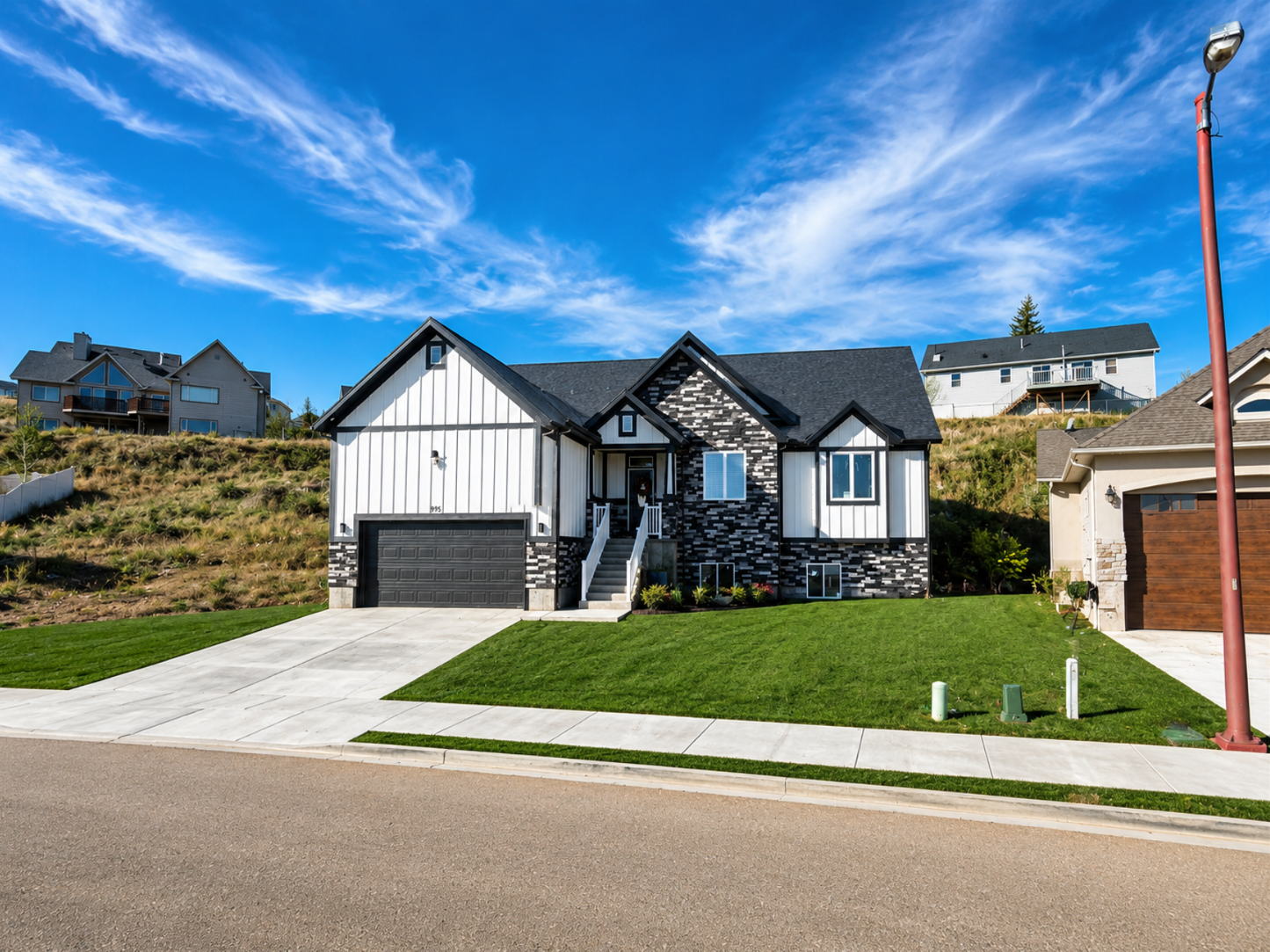
Gregco Roofing & Construction roofs homes across Evanston and the Uinta County corridor. Storm damage, leaks, and old roofs. We take a look and show you the photos.
You see the photos, then you decide what’s next.
New roofs and repairs in asphalt shingle or standing-seam metal.
Documented, no-pressure work. You see the photos, then you decide.
We repair storm and hail damage to your roof, siding, and gutters.
Documented, no-pressure work. You see the photos, then you decide.
We replace storm-damaged siding so your home stays sealed and dry.
Seamless gutters that move snowmelt off the roof and away from the house.
Roofs in Evanston take a beating most towns never see. At 6,749 feet, the sun is stronger and ages shingles faster. Winter brings about 63 inches of snow, January lows near 10°F, and wind off the I-80 corridor. Snow load, ice dams, and freeze-thaw are the local enemies of a roof.
6,749 ft
High-altitude sun degrades asphalt shingles faster than at sea level.
Source: US Census Bureau / City of Evanston
63 in / year
Heavy snow load and ice dams stress roofs every winter.
Source: US climate data (Current Results)
about 10°F in January
Freeze-thaw cycles crack old shingles and lift flashing.
Source: Weather Atlas climate normals
about 211 per year
Strong year-round UV ages a roof from the top down.
Source: City of Evanston / climate databases
about 11 in
Dry air, but wind-driven storms still find weak spots.
Source: US Climate Data
I-80 corridor; 30-60 mph winter gusts
High wind tears loose shingles and bends gutters.
Source: Wyoming DOT / National Weather Service
Evanston sits at 6,749 feet in the Bear River Valley, the county seat of Uinta County and the last Wyoming town before the state line on I-80. That altitude and that wind decide how long a roof lasts here.
The sun is the first thing that wears a roof out. At nearly 6,750 feet, with about 211 clear days a year, ultraviolet light hits harder than it does at lower elevations. UV exposure rises roughly four percent for every 1,000 feet of elevation, so an asphalt roof in Evanston dries out, curls, and loses its protective granules years sooner than the same roof in a valley town. We look for brittle, balding shingles first.
Winter is the second test. Evanston averages about 63 inches of snow a year, with January lows near 10°F. Snow piles up, then partly melts during sunny afternoons and refreezes at night. That freeze-thaw cycle is what cracks aging shingles, lifts flashing, and forms ice dams along the eaves. Ice dams back water up under the roof and into the ceiling, and homeowners often do not see the leak until a stain shows up indoors. When we inspect after a hard winter, we check the valleys, the flashing, and the first three feet above the gutter line, because that is where ice dam damage hides.
Wind is the third. Evanston sits in the I-80 wind corridor, where winter gusts of 30 to 60 mph are common and the interstate closes for wind more days than most Wyoming towns. Wind lifts loose or aging shingles, drives rain sideways under them, and bends or pulls gutters away from the fascia. After a windy stretch we look for missing tabs, exposed nail heads, and seams that have started to separate.
Because of the snow load and the wind, roofing choices matter more here than they do down the hill. Architectural asphalt shingles still work well and cost less, but at this elevation they need good airflow beneath the roof deck and ice-and-water shield at the eaves to fight ice dams. Standing-seam metal sheds snow faster and lasts longer in the wind and sun, which is why more Evanston-area homeowners ask about it every year. We document what your roof actually needs, show you the photos, and let you decide. We document. You decide.
We serve Evanston and the surrounding Uinta County corridor, including the Bear River Valley, Fort Bridger, Mountain View, Lyman, and Kemmerer. If a storm just moved through, the inspection is free and there is no pressure to hire us.
Where we work in Evanston: Downtown Evanston Historic District, Bear River Valley.
Four steps, always in the same order: on-site visit, we show you the photos, written scope, photo record.
Straight answers about roofs, storms, and insurance claims. Still unsure? Just call.
Yes. Evanston sits in the I-80 wind corridor, where winter gusts of 30 to 60 mph are common, according to the Wyoming Department of Transportation and the National Weather Service. That wind gets under the tabs of aging shingles, drives snow sideways beneath them, and pulls gutters away from the fascia. After a windy stretch, look for missing tabs and exposed nail heads.
Altitude and sunshine. Evanston sits at 6,749 feet, per the US Census Bureau and the City of Evanston, and sees roughly 211 clear days a year. Strong ultraviolet light dries out asphalt shingles, curls their edges, and washes the granules into the gutters. If your roof looks bald in patches, or you find grit at the bottom of a downspout, the sun has been at work for a while.
Move what is under the drip, then note where the stain sits. A leaking roof in Evanston usually traces back to an ice dam at the eaves, cracked flashing, or a shingle the I-80 wind lifted — rarely to the spot on the ceiling. We inspect, photograph the source, and show you the pictures before quoting a repair.
Emergency roof repair is work that cannot wait for a scheduled visit — a roof opened by wind off the I-80 corridor, or water already reaching a ceiling. Call and describe what you are seeing at the property. We inspect the roof, photograph what we find, and put the repair scope in writing before work starts.
Ask metal roofing contractors to photograph the roof they are quoting, name the panel system and gauge, and say how it handles snow load and high-altitude sun. Evanston sits at 6,749 feet, per the US Census Bureau, and averages about 63 inches of snow a year, per US Climate Data, so those three answers decide how long the roof actually lasts.
We are based in Evanston. Our address is 201 Woodridge Ln, Evanston, WY 82930, and we are licensed by the City of Evanston. A city licence means Evanston holds a record of us, so you can check who you hire before anyone climbs on your roof.
Because the water arrives frozen and leaves slowly. Evanston averages about 11 inches of precipitation a year and roughly 63 inches of snowfall, per US Climate Data. Snow sits on the roof for weeks, melts a little on each sunny afternoon, and works into any seam that has opened up.
Wind moves it. Evanston sits in the I-80 corridor, where winter gusts of 30 to 60 mph are common, per the Wyoming Department of Transportation and the National Weather Service. Those gusts strip snow off the windward slope and drop it on the sheltered side, so one part of the roof carries much more of the season's 63 inches.
Late spring through early fall. Asphalt shingles need warmth to seal their adhesive strips, and Weather Spark describes Evanston winters as long, freezing and snowy, with January lows near 10°F on Weather Atlas normals. We still handle urgent winter repairs, but a planned full replacement goes better in warm, dry weather.
Evanston sits in the Bear River Valley at 6,749 feet, per the US Census Bureau, and it is the seat of Uinta County. From here we cover Fort Bridger, Mountain View, Lyman, Kemmerer and the Bear River area. Same valley, same weather, so a return visit is never a special trip.
Yes. Our federal Statement of Qualifications lists the Bear River Walkway renovation — City of Evanston, completed May 2024. Public work like that is credential proof, not a service we sell to homeowners. It does show the city itself put us on a job and we finished it.
Right after the spring melt. Evanston carries about 63 inches of snow through a winter, per US Climate Data, and ice damage at the eaves stays hidden under it. Once the snow is gone, lifted flashing and stained decking are visible. Finding them in spring leaves the whole summer to fix them.
It does, on the south and west walls first. Evanston sees roughly 211 clear days a year at 6,749 feet, per the City of Evanston and the US Census Bureau, and Weather Spark calls the summers warm, dry and mostly clear. That much ultraviolet light fades and chalks siding years before anything starts to leak.
A single-ply membrane, usually TPO or EPDM. The Downtown Evanston Historic District holds about sixty buildings and was listed on the National Register of Historic Places in 1983, most built between 1880 and 1930. A low slope holds Evanston's roughly 63 inches of snow a year, per US Climate Data, instead of shedding it, so seams and flashings decide how it performs. Gregco is a Versico Authorized contractor for that membrane work.
Not the same way. Shingles lose granules; a metal panel relies on its factory coil coating, which is made to hold color under ultraviolet light. At 6,749 feet, per the US Census Bureau, that coating does real work. Our principal completed the TopMetal hands-on metal roofing installation masterclass with Sherwin-Williams Coil Coatings, February 2026.
Ice dams form when Evanston's heavy snow melts on a warm roof, runs down, and refreezes at the cold eaves. The ice then backs water up under the shingles and into the ceiling. At 6,749 feet, per the US Census Bureau, with about 63 inches of snow a year, per US Climate Data, this is common here. An inspection shows whether the ice-and-water shield at the eaves is still doing its job.
Both work in Evanston. Architectural asphalt shingles cost less and do fine with good ventilation and ice-and-water shield at the eaves. Standing-seam metal sheds snow faster and lasts longer against the high-altitude sun and I-80 wind. We inspect your roof, show you the photos, and explain the trade-off so you decide.
WYOMING SERVICE AREA
11 communities across Wyoming and the corridor around it — the ones with a built page link straight to it.
Closest by: Bear River, Fort Bridger, Mountain View, Lyman, Kemmerer.
Loading interactive map…
Red pins identify communities where Gregco currently accepts service inquiries. The map is for orientation, not a surveyed service boundary.
Request a roof inspection
Share the address, what you noticed, and when the issue began. Gregco will confirm the service area and contact you about the next step.