Roofing in Green River
New roofs and repairs in asphalt shingle or standing-seam metal.

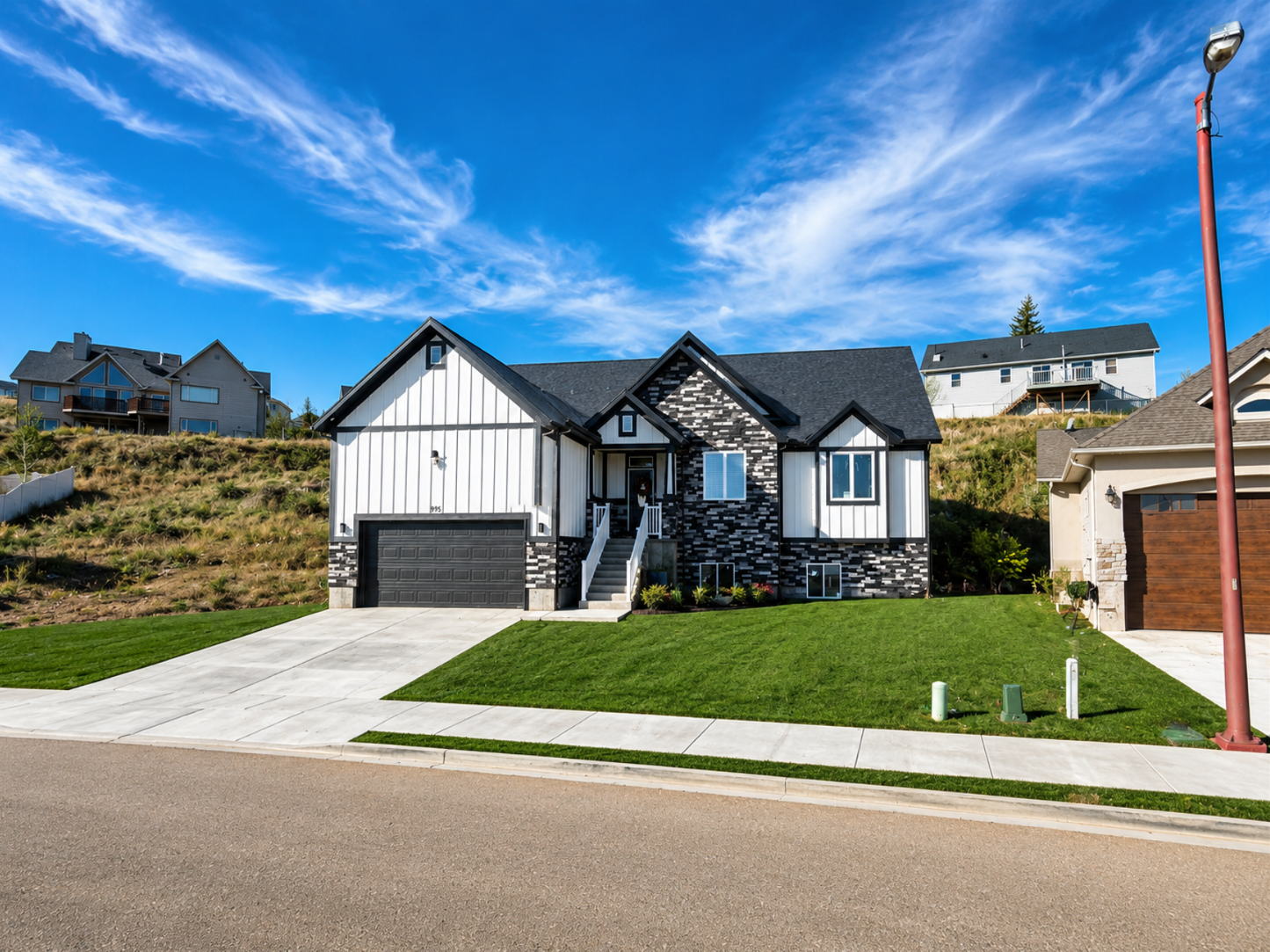
Gregco Roofing & Construction roofs homes across Green River and the Sweetwater County corridor. Storm damage, leaks, and old roofs. We take a look and show you the photos.
You see the photos, then you decide what’s next.
New roofs and repairs in asphalt shingle or standing-seam metal.
Documented, no-pressure work. You see the photos, then you decide.
We repair storm and hail damage to your roof, siding, and gutters.
Documented, no-pressure work. You see the photos, then you decide.
We replace storm-damaged siding so your home stays sealed and dry.
Seamless gutters that move snowmelt off the roof and away from the house.
Green River shares Rock Springs's high-desert weather at 6,200 feet: wind, sun, and dry cold. Open I-80-corridor wind lifts loose shingles, strong year-round UV ages asphalt from the top down, and about 35 inches of snow a year drives the freeze-thaw and ice dams that crack a roof each winter.
6,200 ft
High-altitude sun ages asphalt shingles faster than lower down.
Source: US Census Bureau
about 35 in / year
Snow load and freeze-thaw stress roofs each winter.
Source: US Climate Data
about 11°F in December
Freeze-thaw cracks aging shingles and lifts flashing.
Source: US Climate Data / Weather Atlas
cold semi-arid (BSk); windy, dry
Wind lifts loose shingles; dry air hides slow leaks.
Source: Köppen classification / NWS
I-80 / Red Desert corridor
Steady wind tears tabs and bends gutters.
Source: National Weather Service
Green River sits at 6,200 feet along the river that gave it its name, the county seat of Sweetwater County and Rock Springs's twin town on I-80. It shares the same high-desert weather, wind, sun, and a dry cold, that decides how long a roof lasts out here.
Wind is the first thing that wears a roof out. Green River sits in the open I-80 corridor at the edge of the Red Desert, where there is little to slow the wind before it reaches the rooftops. Steady gusts lift the tabs on aging shingles, drive grit up under them, and loosen fasteners over time. After a windy stretch we look first for missing tabs, exposed nail heads, and separated seams along ridges and hips.
The sun is the second. At this elevation, with a cold semi-arid climate and long stretches of clear sky, ultraviolet light hits harder than it does lower down. UV dries out asphalt shingles, curls their edges, and strips the granules that protect the mat. A Green River roof ages from the top down, faster than most homeowners expect. We check for brittle, balding shingles and for granules collecting in the gutters.
Winter is the third. Green River averages about 35 inches of snow a year, with December lows near 11°F and an average winter around 18°F. The snow melts on sunny afternoons and refreezes at night, and that freeze-thaw cycle cracks aging shingles, lifts flashing, and builds ice dams at the eaves that push water back under the roof and into the ceiling. The dry air fools people into thinking moisture is not a problem, but wind-driven snow finds every weak seam.
Because of the wind and UV, material choice matters. Architectural asphalt shingles work and cost less, but they need good airflow beneath the roof deck and ice-and-water shield at the eaves. Standing-seam metal sheds snow, holds up to the wind, and lasts longer in the sun, which is why more Green River and Rock Springs homeowners ask about it every year. We document what your roof actually needs, show you the photos, and let you decide. We document. You decide.
We serve Green River and the surrounding Sweetwater County corridor, including Rock Springs, Reliance, and Granger. If a storm just moved through, the inspection is free and there is no pressure to hire us.
Where we work in Green River: Downtown Green River, Expedition Island, Tollgate Rock area.
Four steps, always in the same order: on-site visit, we show you the photos, written scope, photo record.
Straight answers about roofs, storms, and insurance claims. Still unsure? Just call.
Yes. Green River has a cold semi-arid climate under the Köppen classification used by the National Weather Service, and that dry air fools people into thinking moisture is not a problem. Wind-driven snow still finds any open seam, and with about 35 inches of snow a year, per US Climate Data, meltwater gets plenty of chances to work under a loose shingle.
Midwinter. December lows here average near 11 degrees, per US Climate Data, while the afternoon sun at 6,200 feet still melts the snow on a south-facing slope. The water runs, then refreezes after dark. That daily cycle lifts flashing, opens up old nail holes, and builds ice at the eaves. A ceiling stain that shows up in January usually starts this way.
The west side, usually. Weather Spark records Green River's predominant wind direction as westerly in every month of the year, and the National Weather Service places the town in the open I-80 and Red Desert corridor. West-facing slopes, ridges and hip lines lose shingle tabs first.
Most of the year. Weather Spark puts Green River's windier stretch at about 7.8 months, from late October to mid-June, with March the windiest month. Wind works on a roof here far longer than snow sits on it, so lifted tabs and loose flashing turn up well outside storm season.
Less snow, not less stress. Green River averages about 35 inches a year, per US Climate Data, against roughly 47 inches in Kemmerer and 63 in Evanston, per Current Results. What falls here comes with wind and melts and refreezes at 6,200 feet, so it gets driven under shingles instead of sitting still.
Yes, and you can start from the ground. The National Weather Service places Green River in the open I-80 and Red Desert corridor, where steady wind bends gutters and works them off the fascia. Look for a run sagging away from the roof edge, gaps opening at the seams, and a twisted downspout.
It can, within limits. Asphalt shingles seal when the sun warms them, and December lows here average near 11 degrees, per US Climate Data, so the sealant strip may not bond until it warms up. Winter work means hand-sealing where the cold requires it and watching the forecast, not the calendar.
Wind decides where it lands. Green River averages about 35 inches of snow a year, per US Climate Data, and sits in the open Red Desert stretch of I-80, per the National Weather Service. On a low-slope roof that snow piles against parapets and behind rooftop units rather than lying evenly across it.
Ultraviolet light at altitude. Green River sits at about 6,200 feet, per the US Census Bureau, and the National Weather Service describes a dry, cold semi-arid setting with long clear stretches. Sun-baked sealant at flashing, chimney lines and roof penetrations shrinks and splits before the shingles around it look worn.
More than 70 degrees. Weather Spark records an average July high near 84 degrees, while December lows here average about 11 degrees, per US Climate Data. Roof materials expand and contract across that range every year, and that movement works fasteners loose and reopens old nail holes along seams.
It matters because so much of it is the same age. WyoHistory.org, the Wyoming State Historical Society's encyclopedia, records a mining and energy boom that tripled Green River from roughly 5,000 people to 15,000 between the mid-1970s and the early 1980s. Homes from that stretch are usually on their second or third roof covering.
Exposure changes lot by lot. Downtown Green River's older, tighter blocks break some of the wind, while houses on open ground toward Tollgate Rock and the river flats near Expedition Island catch the full westerly flow the National Weather Service ties to the I-80 and Red Desert corridor. Damage follows exposure, not the street name.
WYOMING SERVICE AREA
11 communities across Wyoming and the corridor around it — the ones with a built page link straight to it.
Closest by: Rock Springs, Reliance, Granger, Little America.
Loading interactive map…
Red pins identify communities where Gregco currently accepts service inquiries. The map is for orientation, not a surveyed service boundary.
Request a roof inspection
Share the address, what you noticed, and when the issue began. Gregco will confirm the service area and contact you about the next step.