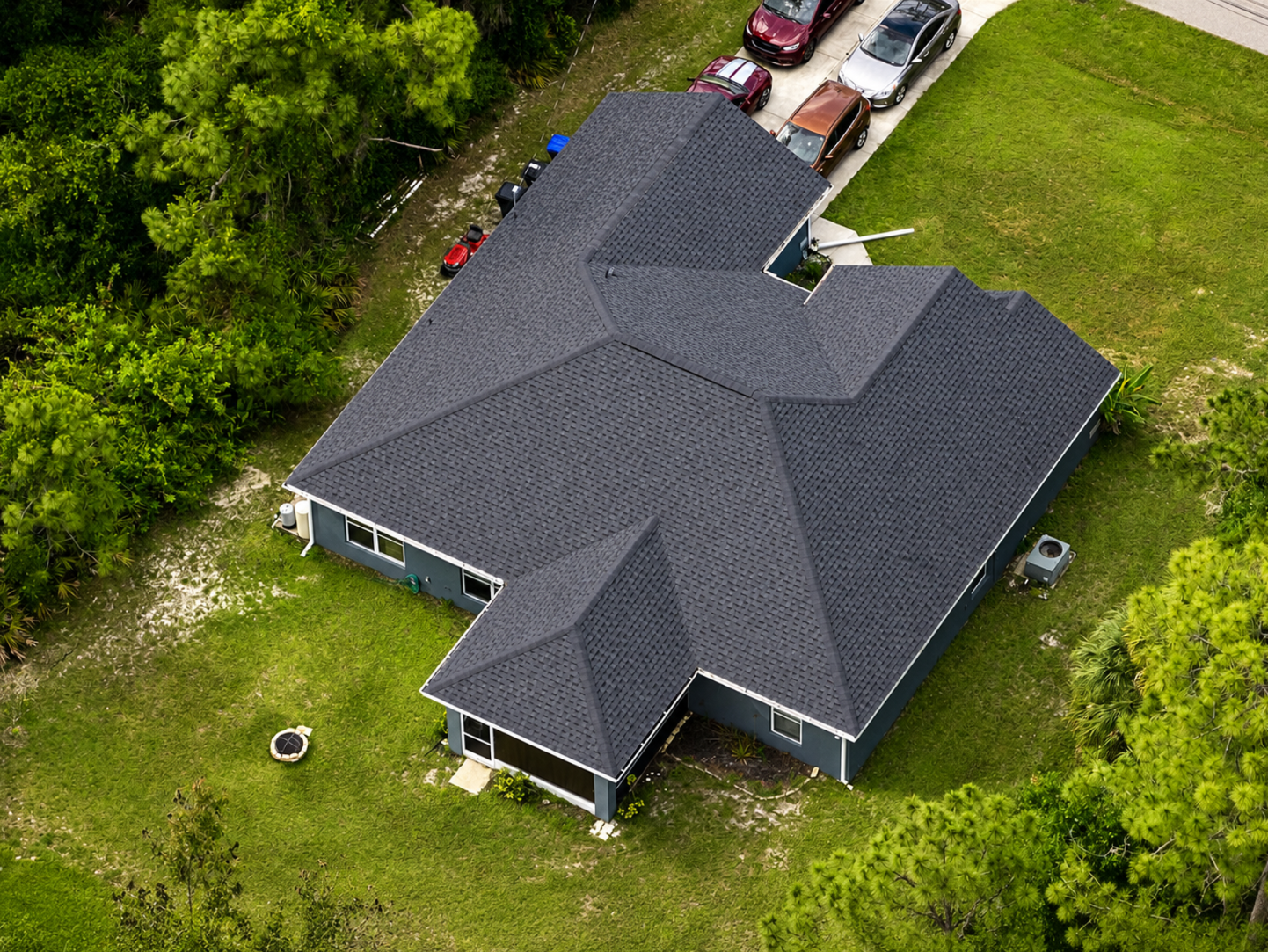
The repair-or-replace decision comes down to deck condition, not shingle age. A sound deck with damage in one area favors repair; a compromised deck, or damage across more than one slope, favors replacement. Evanston sits at 6,749 feet, per the US Census Bureau, where freeze-thaw winters advance that damage faster.
Gregco Roofing & Construction opens the damaged area and looks at what the deck actually shows before recommending either one — the same photo record and written scope whichever way the roof points. We document. You decide.
There is no single rule that fits every roof, but the pattern holds: repair when the deck is sound and the damage is contained, replacement once the deck itself has failed or the damage keeps returning somewhere new. The four factors below are how to tell which side of that line a specific roof is actually on.
What Roof Repair or Replacement covers
What roof repair or replacement covers in Wyoming
Age of the Roof, Extent of the Damage, Cost Over Ten Years, and Condition of the Decking — each explained below.
Age of the Roof
Age changes what a repair is likely to be treating, not whether one is possible. An isolated leak on a roof ten years into its life is usually just that — one repairable problem. The identical leak on a roof twenty-two years in is more often one visible symptom of wear spread across the whole roof, where a repair fixes what shows and leaves the rest to fail on its own schedule.
Extent of the Damage
One damaged area with everything around it intact is close to a repair by definition. Damage on more than one slope, or damage that keeps reappearing somewhere new after being fixed, points the other way — it usually means the weakness is spread through the roof, not local to one spot, and a repair only ever chases the next place it shows up.
Cost Over Ten Years
A single repair is almost always cheaper than a full replacement on its own — that comparison is not the useful one. What matters is the pattern: a roof needing a repair every year or two is spending toward a replacement it has not paid for yet, while a roof with one contained problem and years of sound life left has nothing to compare it against.
Condition of the Decking
The decking is the one factor the other three cannot override. A roof can be young, with damage confined to one slope, and still not be a repair candidate if the deck underneath has gone soft — shingles fastened to bad decking fail again regardless of what happens on the surface. Every honest recommendation starts with opening the area and looking at the deck itself.
What to expect
How it works
Four steps, always in the same order: we look before we decide, we open the damaged area, we weigh the four factors together, we put the recommendation in writing, either one.
1
We look before we decide. An inspection comes first, every time — the deck, the extent of the damage and the roof condition get checked before either word gets used.
2
We open the damaged area. What the deck actually shows underneath decides this, not what the shingles look like from the ground, so we open the area and look.
3
We weigh the four factors together. Age, extent, ten-year cost and deck condition get weighed against each other — none of them decides it alone.
4
We put the recommendation in writing, either one. A repair scope or a replacement scope, whichever the roof actually supports, goes in writing before price is discussed.
Answers about roof repair or replacement
Common questions
Wyoming property owners ask 10 questions most often about roof repair or replacement — answered here in plain language.
When is a roof repair the wrong choice?
Repair is the wrong choice once the deck itself has failed, or once damage keeps turning up on new slopes after being fixed — at that point a repair only delays the same failure showing up somewhere else on the same roof. Repair is usually the right choice when the deck underneath is sound and the damage is confined to one identifiable area: a torn shingle course, a cracked pipe boot, a valley that was never flashed correctly. Most repair calls fall into that second group.
At what age does replacement usually beat repair?
There is no fixed age that decides it — two roofs installed the same year can be in very different condition depending on how each one was maintained and what it has been through. What actually shifts the balance toward replacement is a pattern: repairs becoming more frequent, damage showing up in new spots instead of the same one, and a deck that shows wear once it is opened up. An inspection reads that pattern on the specific roof rather than applying a number that ignores it.
Is it cheaper to repair twice or replace once?
It depends on what the two repairs are fixing, not on a rule that always favors one side. Two repairs addressing two unrelated, contained problems on an otherwise sound roof can still be the cheaper path over time. Two repairs addressing the same recurring weakness are usually money spent toward a replacement that was already coming. The written scope for each repair should say which situation applies.
Does a repair hurt the resale value of the house?
A single, documented repair on an otherwise sound roof is not something buyers or their inspectors typically flag — every roof needs occasional maintenance, and a photographed, written record of the work reads as upkeep, not a defect. A roof carrying a visible pattern of patches, mismatched material, or unresolved damage is a different story, and that pattern is exactly what a home inspection is built to catch before closing.
Can you repair half a roof?
Yes, when the damage is genuinely confined to that half and the deck underneath the rest of the roof is sound — a repair only needs to cover the area that actually failed. What it cannot do is make a roof with wear spread across every slope look consistent by fixing just the worse half; at that point the untouched half is carrying the same age and exposure as the half that just failed. See the roof repair page.
How much damage is too much to repair?
There is no fixed percentage of a roof that has to be damaged before repair stops making sense. What matters is whether the damage is contained to one identifiable area or has spread across more than one slope, and whether the deck underneath is still sound once it is opened up. Damage that is contained, over a sound deck, usually means repair. Damage spread wide, or a deck that has gone soft, usually means it is time to look at a full replacement instead. See the roof replacement page.
Does replacing only the damaged slope look obvious?
Often, yes. Shingle color and even the exact profile change over time as products get discontinued and the existing field fades in the sun, so a newly replaced slope next to older ones can end up a visible shade apart even with a close match attempt. That visual difference is a real trade-off to weigh against a full replacement, not a defect hidden from you — we tell you before work starts whether a close match is realistic for the specific roof.
If the decking is wet, can it still be repaired?
Wet decking on its own does not rule out a repair. Soaked sheathing found under an isolated leak commonly gets cut out, replaced, and shingled back over as part of a normal repair. What changes the answer is how far the wet decking extends once it is opened up: a contained soft spot is a repair, while wet or rotted sheathing running across multiple rafters or more than one slope is a sign the roof needs more than a patch.
Will a repair void my existing warranty?
It depends on the manufacturer's terms and who performs the work, not on the fact that a repair happened at all — some warranty terms require using an authorized contractor or following a specific process, and an unauthorized crew is what typically causes a problem, not the repair itself. Check the documentation that came with the original installation, and read this site's terms page for what workmanship coverage does and does not include. Read the terms page.
How do I get a straight answer instead of a sales pitch?
A sales pitch has a specific shape: it recommends replacement before anyone has opened the roof, it never treats repair as a real option, it leans on urgency, and it hands you a scope with no photos and no specifics about what is actually wrong. A straight answer looks different — it names the exact problem in writing, with a photo of it, and it recommends a repair when the roof supports one, even though a repair is the smaller job. Ask to see the deck, ask for the finding in writing before price comes up, and treat any recommendation that skips both as a reason to get a second opinion.
WYOMING SERVICE AREA
Repair or Replace across Wyoming
Roof Repair or Replacement is available across Evanston, Kemmerer, Cokeville, Rock Springs, Green River, Mountain View, Lyman — every listed city links to its own page.