Roofing in Mountain View
New roofs and repairs in asphalt shingle or standing-seam metal.

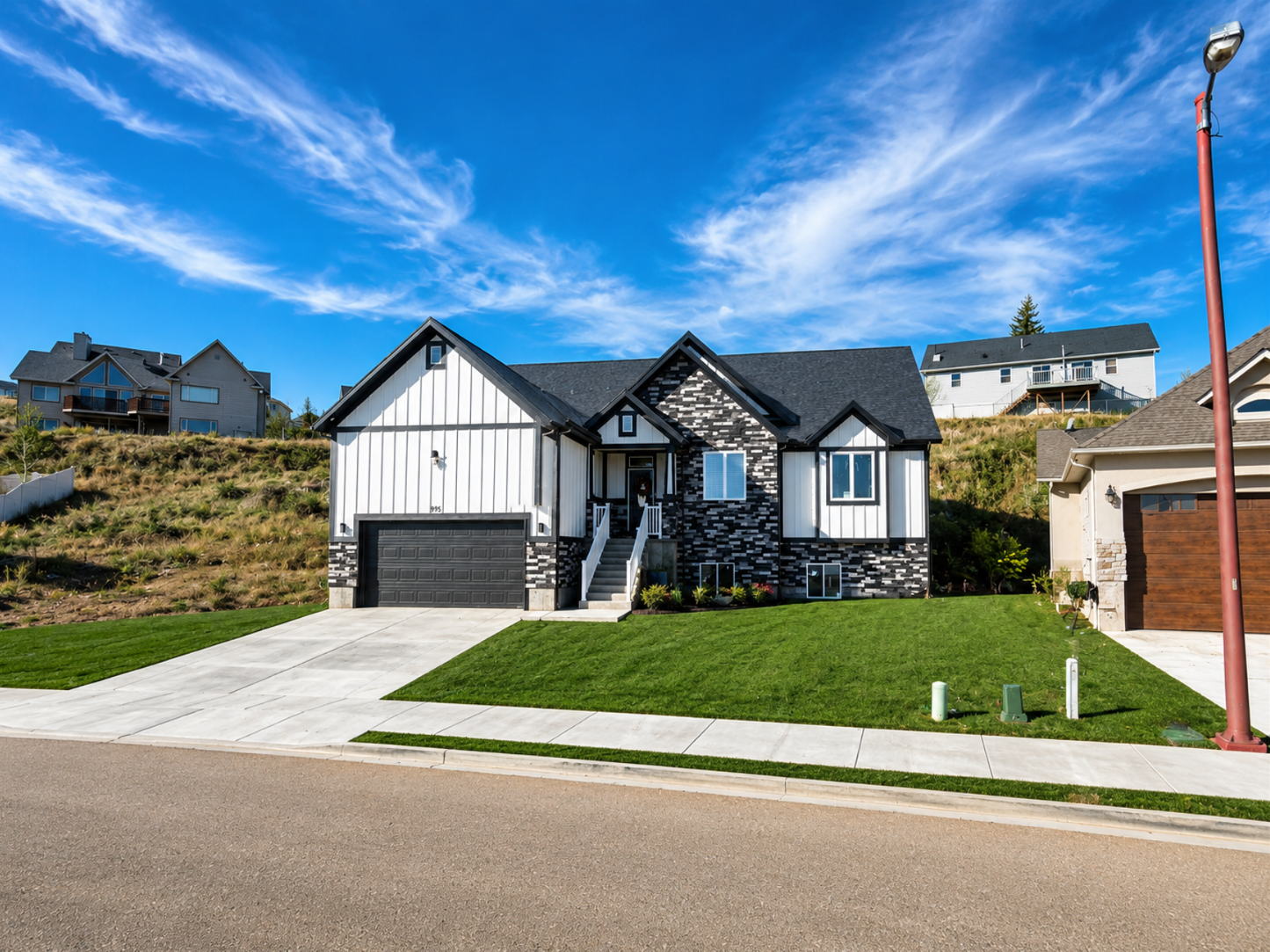
Gregco Roofing & Construction roofs homes across Mountain View and the Uinta County corridor. Storm damage, leaks, and old roofs. We take a look and show you the photos.
You see the photos, then you decide what’s next.
New roofs and repairs in asphalt shingle or standing-seam metal.
Documented, no-pressure work. You see the photos, then you decide.
We repair storm and hail damage to your roof, siding, and gutters.
Documented, no-pressure work. You see the photos, then you decide.
We replace storm-damaged siding so your home stays sealed and dry.
Seamless gutters that move snowmelt off the roof and away from the house.
At about 6,800 feet, Mountain View is the Bridger Valley's gateway to the Uinta Mountains, colder and snowier than the interstate towns. Deep cold makes shingles brittle, about 40 inches of snow a year drives ice dams and snow load, and open-valley wind plus high-altitude UV finish the wear.
about 6,800 ft
High-altitude UV ages shingles faster than at lower elevations.
Source: US Geological Survey
about 40 in / year
Snow load and ice dams stress roofs each winter.
Source: US Climate Data
Bridger Valley, gateway to the Uinta Mountains
Mountain weather drives heavy snow and freeze-thaw.
Source: US Geological Survey
freezing, windy high valley
Cold-air pooling makes shingles brittle; wind lifts tabs.
Source: Weather Spark climate normals
Mountain View sits at about 6,800 feet at the south end of the Bridger Valley in Uinta County, the gateway town to the Uinta Mountains and the high country beyond. That mountain setting means colder nights and more snow than the towns down on the interstate, and both are hard on a roof.
Cold is the first test. The valley pools cold air at night, and the mountains just to the south pull the temperature down further, so winter lows run deep. Deep cold makes asphalt shingles brittle. When the snow on a roof melts on a sunny afternoon and refreezes after dark, that freeze-thaw cycle cracks the brittle shingles, lifts flashing, and builds ice dams along the eaves that push water back under the roof and into the ceiling. It is a leak that hides until a stain shows up indoors.
Snow is the second. Mountain View averages around 40 inches of snow a year, and being closer to the Uintas it can catch more in a heavy winter. Wet, heavy snow stresses the deck, the fasteners, and any low-slope or flat sections. After a hard winter we check the valleys, the flashing, and the first few feet above the gutter line, because that is where snow load and ice dams do their damage.
Wind and sun do the rest. The open valley gives wind a long run at the rooftops, lifting loose tabs and bending gutters, and the high-altitude UV bleaches and dries out shingles all year. We look for missing tabs, exposed nail heads, and brittle, balding shingles.
Because of the snow load and the cold, material and detailing matter here. Architectural asphalt shingles work, but they need strong airflow beneath the roof deck and ice-and-water shield at the eaves. Standing-seam metal sheds snow fast and holds up to the cold and wind, which is why more homeowners around Mountain View and Fort Bridger ask about it every year. We document what your roof actually needs, show you the photos, and let you decide. We document. You decide.
We serve Mountain View and the surrounding Bridger Valley, including Lyman, Fort Bridger, Urie, and Robertson. If a storm just moved through, the inspection is free and there is no pressure to hire us.
Where we work in Mountain View: Downtown Mountain View, Bridger Valley, Fort Bridger.
Four steps, always in the same order: on-site visit, we show you the photos, written scope, photo record.
Straight answers about roofs, storms, and insurance claims. Still unsure? Just call.
It does. Mountain View sits at about 6,800 feet at the south end of the Bridger Valley, the gateway to the Uinta Mountains, per the US Geological Survey. Mountain weather arrives sooner and colder here than down on the interstate, so a roof goes through more freezing and thawing in a season. The detail at the eaves matters more here for that reason.
Start with the ridge and the hips. Weather Spark describes winters here as freezing and windy, and the open Bridger Valley gives a gust a long run at the rooftops with nothing to slow it down. From the ground, look for missing tabs, shingle corners standing up, exposed nail heads, and gutters pulling away from the fascia. Anything you can see from below deserves a closer look.
Yes. Our documented local record includes the Mountain View High School sidewalk replacement — Uinta County School District 4, completed May 2018, listed in our federal Statement of Qualifications. We work across Uinta County from Evanston, so Mountain View and the Bridger Valley are part of the regular route, not a special trip.
Freeze-thaw at altitude. Water soaks into the concrete, freezes overnight, and expands, and at about 6,800 feet at the south end of the Bridger Valley, per the US Geological Survey, that cycle repeats all winter. Slabs then lift at the joints. We do flatwork here as well as roofing.
It adds to it. Snow reflects up to 80% of ultraviolet light back upward, per the US Environmental Protection Agency, and at about 6,800 feet the incoming UV is already strong. With roughly 40 inches of snow a year here, per US Climate Data, shingles take sun from both directions.
Yes. We serve Mountain View and the surrounding Bridger Valley, including Fort Bridger, Urie, Robertson and Lyman. Mountain View is the valley's gateway to the Uinta Mountains, per the US Geological Survey, and the addresses sitting farther along that climb see winter arrive first.
Late spring through early fall. Shingles need warmth to seal. Mountain View sits at about 6,800 feet, higher than Lyman down the valley at about 6,700, and closest to the Uinta Mountains, per the US Geological Survey, so its working season closes earlier than the rest of the Bridger Valley.
Off the roof, and quickly. Metal sheds instead of holding, which matters at about 6,800 feet with roughly 40 inches of snow a year, per US Climate Data. Plan where that load lands, though — over a walkway, a doorway, or a parked vehicle. Homeowners around Mountain View and Fort Bridger ask about metal more each year.
It holds snow rather than shedding it. With about 40 inches a year at roughly 6,800 feet, per US Climate Data, a low-slope roof near the Uinta front carries weight for months. We check the seams, the drainage and the edge detail, and TPO or EPDM membrane usually suits these buildings.
Drifting. Mountain View sits in an open high valley at about 6,800 feet, per the US Geological Survey, and there is little between the Uinta front and the rooftops to break the wind. Blowing snow settles out on the sheltered slope, so one side of a roof can carry far more weight than the other.
Once the valley clears, usually late spring. About 40 inches of snow a year, per US Climate Data, hides damage for months, and at roughly 6,800 feet on the Uinta front that cover lingers. When it goes, ice-dam staining, lifted flashing and missing tabs all show at once.
It can. Fort Bridger dates to 1843, per Wyoming State Parks, Historic Sites and Trails, and the properties spread around it range from very old to newly built. We check the deck and how many layers are already up there before recommending anything, because two neighbors here can need different work.
WYOMING SERVICE AREA
11 communities across Wyoming and the corridor around it — the ones with a built page link straight to it.
Closest by: Lyman, Fort Bridger, Urie, Robertson.
Loading interactive map…
Red pins identify communities where Gregco currently accepts service inquiries. The map is for orientation, not a surveyed service boundary.
Request a roof inspection
Share the address, what you noticed, and when the issue began. Gregco will confirm the service area and contact you about the next step.