TPO Membrane
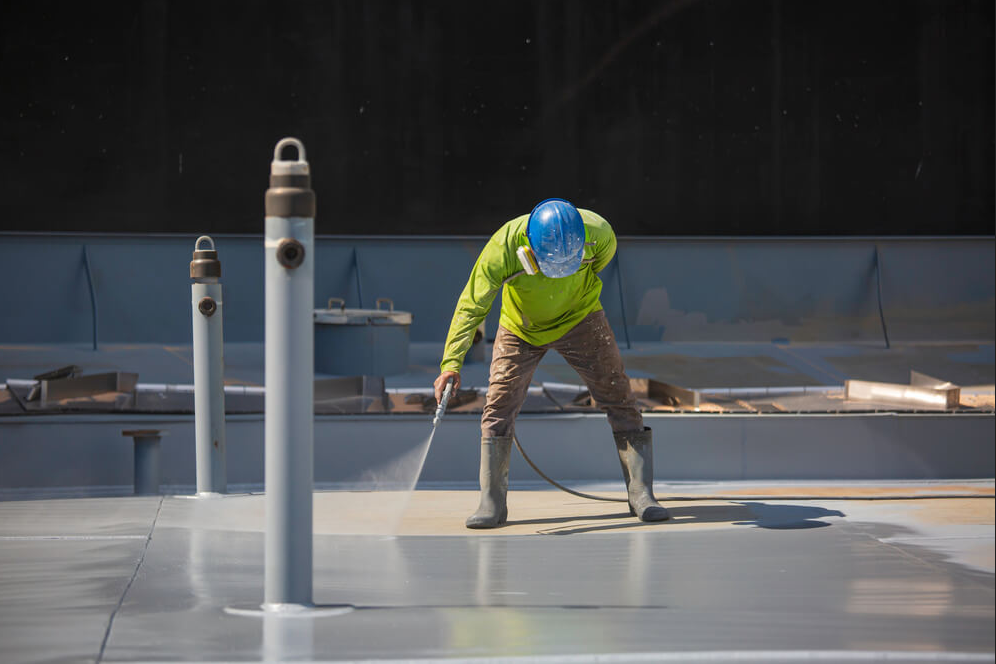
A white, heat-welded single-ply sheet that reflects sunlight instead of absorbing it. Seams are welded and tested, not just lapped and glued, before we call the roof finished.

TPO, EPDM and low-slope metal roofing for commercial buildings, inspected, documented and scoped in writing before price is discussed.
Commercial roofing means the flat and low-slope membrane and metal systems used on commercial and municipal buildings, not a pitched residential roof. A low-slope deck carries snow instead of shedding it, so ponding and rooftop penetrations decide most failures. Kemmerer averages about 47 inches of snow a year, per US Climate Data.
Gregco Roofing & Construction has installed and repaired commercial roof systems across the Evanston corridor since 2011. We inspect the roof, photograph seams, flashings and rooftop penetrations, and put membrane type and scope in writing before anyone discusses price. We document. You decide.
A flat roof fails at its details, not across the open field: seams, drains, curbs and rooftop penetrations decide the outcome more than the membrane brand does. The same photographed, written scope we give a homeowner works just as well in front of a property manager, an owner or a board — a record you can act on, not a verbal impression.
TPO Membrane, EPDM Membrane, Metal & Low-Slope, and Maintenance & Documentation — each explained below.
A white, heat-welded single-ply sheet that reflects sunlight instead of absorbing it. Seams are welded and tested, not just lapped and glued, before we call the roof finished.
A black rubber single-ply sheet, seamed with adhesive or tape. It has a long field record on low-slope roofs and remains the right fit where a building already runs EPDM.
Standing-seam and low-slope metal for commercial roofs that carry enough pitch to shed water without a membrane. Panel gauge and trim detail at every penetration decide how it holds up.
Photographed condition reports, drain and flashing checks, and a written scope before repair or replacement — the record a facilities manager needs to plan a budget or bring to ownership.
Four steps, always in the same order: on-site inspection, photo documentation, written commercial scope, we do the work.
Wyoming property owners ask 10 questions most often about commercial roofing — answered here in plain language.
TPO is a white, heat-welded single-ply sheet; EPDM is a black rubber membrane seamed with adhesive or tape. TPO reflects sunlight and runs cooler on an exposed roof, and its welded seams test stronger than an adhered lap. EPDM resists ponding water and chemical exposure well and is easier to patch in the field with matching material. Roof slope, rooftop equipment and what is already on the building usually decide which one fits.
We don't have a documented lifespan figure on file for commercial membrane systems, and we won't invent one to answer the question. What actually decides service life is membrane thickness, sun exposure, foot traffic from rooftop equipment, and how well the seams and flashings were detailed at install. Ask about thickness and installation detail on the specific system you are pricing rather than a round industry number.
Often it can be repaired. Single-ply membrane typically fails first at seams, flashings and penetrations, not across the open field, and those areas get reworked while the roof stays in service. Widespread splits, soft spots underfoot, or wet material found below the membrane point toward full replacement instead. We hold Versico Authorized Contractor status, which covers exactly this kind of membrane work.
A flat roof is not perfectly flat — it is built with a slight slope toward drains, and ponding shows up wherever that slope has flattened out, a drain has clogged, or the deck has sagged under load. Standing water that does not clear within a day or two stresses the membrane and the seams below it, so a recurring pattern is worth having looked at rather than just watched.
Work happens on the roof and at the parapet, so most businesses stay open through the project. Expect noise overhead during tear-off, staged material and a dumpster in the parking area, and rooftop equipment access coordinated around business hours where possible. We give you the schedule and any access changes in writing before work starts, so operations can plan around it instead of guessing.
We walk the entire roof, not just what is visible from the ground: membrane condition, every seam and flashing detail, drains and scuppers, curbs around rooftop equipment, and any penetration where a pipe, vent or unit passes through the deck. Everything gets photographed, and you get a written condition report before any repair or replacement is discussed.
That comes down to what the lease says, not a general rule — commercial leases split roof responsibility differently depending on whether it runs gross, modified gross or triple-net. Look at the maintenance and capital-repair clauses specifically; they often assign day-to-day upkeep to one party and structural or full-system replacement to the other. We are not positioned to interpret your lease, but once responsibility is established we document conditions for whoever holds it.
We do not publish a number, because it is not ours to set. R-value on a commercial roof comes from the energy code the local building department has adopted for that jurisdiction and that building type, and it varies accordingly. We build the roof assembly to whatever the approved permit specifies, and we can point you to the building department that holds the actual figure.
Rooftop units, pipes and vents each penetrate the membrane at a curb or a boot, and that detail is where a flat roof actually fails, not the open field. We flash and seal every penetration to the membrane manufacturer's method, and where equipment sits directly on the roof rather than a curb, that gets addressed as part of the scope instead of worked around.
Yes. A property manager gets the same photographed condition report and written scope for one building or several, so a portfolio's roofs can be tracked and budgeted the same way across properties. Scheduling around tenants and coordinating with an existing maintenance contact are part of how we run a multi-building account.
WYOMING SERVICE AREA
Commercial Roofing is available across Evanston, Kemmerer, Cokeville, Rock Springs, Green River, Mountain View, Lyman — every listed city links to its own page.
Loading interactive map…
Red pins identify communities where Gregco currently accepts service inquiries. The map is for orientation, not a surveyed service boundary.
Request a commercial roofing estimate
Share the address, what you noticed, and when the issue began. Gregco will confirm the service area and contact you about the next step.